Review: 4th July Eagle Folk Art Shadow Box Design
As a designer who spends more time staring at stitch maps than most people spend watching TV, I approach every new machine embroidery design with a mix of optimism and skepticism. We've all been there: you buy a file based on a pretty thumbnail, load it onto your machine, and realize halfway through that the density is going to turn your fabric into cardboard or the details are too fine for standard thread. That is why I took a close look at the 4th July Eagle Folk Art Shadow Box before committing it to a client project. This isn't just about whether it looks cute on a screen; it's about how it performs as a finished product in the real world.
First Impressions and Visual Personality
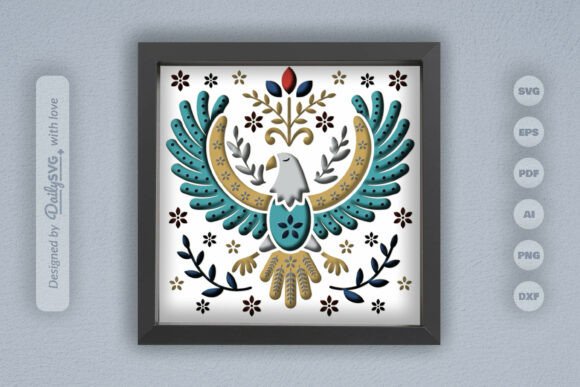
The first thing that strikes me about this design is its mood. It leans heavily into a rustic, Americana aesthetic without feeling cliché. The "Folk Art" descriptor in the title is accurate; the lines feel hand-drawn and organic rather than rigidly geometric. For an embroidery project intended for the Fourth of July, this is a welcome departure from the overly polished, military-style eagles we see everywhere. The layout suggests a layered composition, which aligns with its classification under Shadow Boxes. Even though this is a 3D SVG meant for cutting machines like Cricut or Silhouette, the visual weight of the elements translates well to embroidery planning. If you were to adapt this for stitching, perhaps by using it as a template for appliqué or breaking it down into color blocks, the visual hierarchy is strong. The eagle sits proudly, surrounded by elements that frame it without cluttering the space.
Real-World Application: The Tote Bag Scenario
To truly test the viability of a design, I imagine it on a specific product. Let's say I'm preparing a run of custom tote bags for a local boutique's summer collection. The 4th July Eagle Folk Art Shadow Box feels immediately at home here. A canvas tote provides the stability needed for detailed work, and the folk art style complements the natural texture of the fabric.
If I were using this as a reference for an applique design, I would cut the main eagle shape from a sturdy cotton or linen blend. The "shadow box" effect could be achieved by layering different fabrics—perhaps a distressed red background behind a white eagle with blue accents. This approach reduces stitch density issues because you aren't filling large areas with thread; instead, you are letting the fabric do the heavy lifting. For a small shop product, this method speeds up production time while maintaining a high-end, handmade product feel. Customers love items that look unique, and the layered nature of this design screams "crafted with care" rather than "mass-produced."
Versatility Across Different Products
Beyond tote bags, where else does this design shine? I can see it working beautifully as sweatshirt embroidery on a heather grey hoodie. The rustic vibe pairs perfectly with casual wear. However, you have to be mindful of the fabric texture. On a loopback fleece, fine details might get lost, so simplifying the smaller elements of the 3D SVG layers into broader satin or fill stitches would be necessary.
For baby embroidery, such as a commemorative onesie for a baby's first Fourth of July, the softness of the design is a plus. But here, scale is everything. You would need to ensure the design is resized appropriately so that no small parts become choking hazards or unravel after a few washes. As a personalized gift, adding a name below the eagle in a complementary script font could elevate the item from a generic holiday decoration to a cherished keepsake. For Etsy sellers looking to expand their design assets, offering this as part of a "Summer Patriotic Collection" alongside matching kitchen towels or pillow covers could drive significant buyer engagement.
Technical Considerations and Potential Pitfalls
While the aesthetic is solid, practical execution requires caution. Since the original file is a 3D SVG for cutting, any embroiderer adapting this must pay close attention to stitch density. If you convert these sharp vector shapes directly into dense fill stitches, you risk creating a stiff, plastic-like patch that cracks when the garment moves.
- Fabric Choice: Avoid using this on thin, stretchy fabrics like rayon or lightweight jersey unless you are an expert with stabilizers. The weight of the layered look (even if simulated with thread) can distort the garment.
- Small Details: Folk art often includes tiny decorative dots or fine lines. In embroidery, anything under 2mm can be tricky. Check if the design relies on running stitch for these details; if so, they may need to be thickened to a light satin stitch for durability.
- Curved Surfaces: Trying to put a complex, multi-layered design like this on a cap is risky. The curvature of the front panel can cause registration issues between layers. Stick to flat surfaces like tote bag designs, aprons, or pillow covers for the best results.
- Washability: Any item labeled as a holiday embroidery piece will likely be worn repeatedly and washed often. Ensure your underlay is sufficient to prevent the top stitches from sinking into the fabric over time.
Enhancing Brand Value and Professionalism
Using a distinctive design like the 4th July Eagle Folk Art Shadow Box can significantly impact your brand perception. When customers see a cohesive, well-thought-out design, it builds trust. It signals that you, as a craft business owner, care about quality. Whether you are selling custom apparel at a craft fair or listing printable mockups online, the professionalism of your presentation matters. This design offers a narrative—it tells a story of tradition and celebration. That emotional connection is what turns a browser into a buyer. Just remember to create black-and-white mockups to check contrast before finalizing your thread colors. Sometimes, a design that pops on a white background disappears entirely on navy blue.
Final Verdict for Designers
The 4th July Eagle Folk Art Shadow Box is a charming asset with strong potential for commercial embroidery and personal projects alike. Its strength lies in its character and versatility. However, because it originates as a cutting file, the onus is on the embroiderer to translate those clean cuts into stitch types that respect the fabric.
Before you start stitching, always test the design on scrap fabric identical to your final material. Check your hoop size constraints, verify that your stabilizer choice matches the fabric weight, and confirm the licensing terms if you plan to sell finished items. The product description mentions it is perfect for smooth cutting and assembly, but for us needle-and-thread folks, that means we have the freedom to interpret those shapes creatively. With the right adjustments to satin stitch widths and fill patterns, this design can become a standout piece in your summer lineup. It's not just a digital file; it's a starting point for creating something tangible and memorable.